Hype Check · TraderLion
Worth your time?
The Reality of Relative Strength Based Trading with Linda Raschke by TraderLion
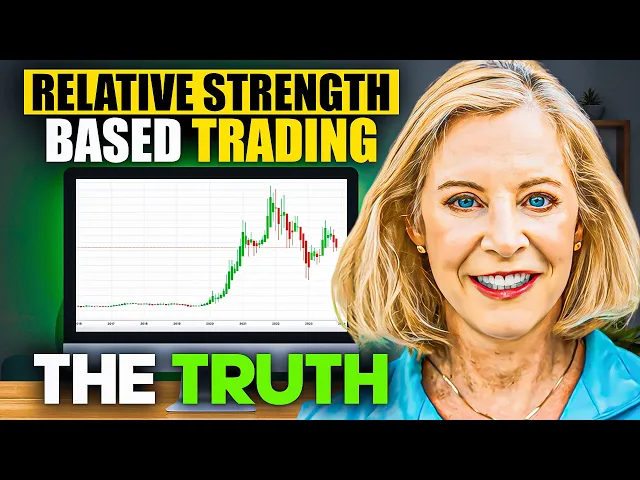 Watch on YouTube
Hype score · lower is better
21/100
Useful / Authentic
This is a teaching-first talk: practical, hands-on techniques and concrete examples with minimal selling.
Receipts
Why this score
- Scored from the transcript, summary, and output signals.
Title deliveredTitle promises a look at relative-strength trading; the video explains look-back choices (1 day, 21 days, 6 months), Gary Anderson’s Janus spread method, scans, and indicator settings.
Skip the video
The short version
Kept by Clip'd
Linda Raschke explains how relative strength works across different lookback periods and market environments, and why you must change tactics between positive-feedback (momentum) regimes and negative-feedback (trading-range) regimes. She demonstrates practical scans and indicators (1-day, cycle-start ~21 days, 120-day/6-month lookbacks, 2-period rate of change, a 3-10-16 oscillator), presents Gary Anderson's Janus Factor method for leader/laggard spreads, and gives hands-on rules for risk, preparation, and self-discipline.
Keep the lesson
What it teaches
- Market-regime matching: Match strategy to regime. Use momentum/relative-strength leaders and wide leader-laggard spread in positive-feedback trending markets; switch to contrarian buys of laggards and mean-reversion tactics when the spread converges in a trading range. Common mistake: applying a single strategy (trend
- Signal hygiene and pre-existing conditions: Focus on pre-existing conditions that favor range expansion (three consecutive strong bars, rising 2-period ROC, positive slope on your smoothed oscillator) before allocating capital. When not to apply it: in fragmented markets with oscillators out of sync. Common mistake: ch
- Process over prediction: Build simple, repeatable prep (nightly logging, a short watchlist, entry cues) to reduce cognitive bias and impulsive trading. Apply this whenever you trade size or multiple markets. Common mistake: trading too-small (sloppy) or too-large (fear-driven) positions because you lack a clear, practi
Jump straight there
Key moments
- 0:36Never average down: Linda's Golden Rule, "never get caught into averaging never never never that's my Golden Rule"; sets a strict risk-management boundary.
- 3:54Lookback insight: "the absolute worst look back period was one month or four weeks and the optimal look back period was six months", frames long-term selection for investment candidates.
- 10:35TradeStation grid demo: Shows three relative-strength lookbacks side-by-side (120d, cycle-start/intermediate, 1d) and how to turn candidates into a watchlist.
- 18:21Leader/laggard spread concept: Defines momentum as the spread between baskets of winners and losers and links spread behavior to regime changes.
- 21:31Anderson calculation method: Identify strongest/weakest sets on day D, average forward changes, cumulate forward performance and update weekly.
- 23:281930s counterexample: Historical negative-feedback (mean-reversion) period where trend-following lost heavily, proving strategies fail in some regimes.
Lines worth keeping
Quotes
- we want to be mindful about how do we make the most amount of money in the least amount of time0:00
- never get caught into averaging never never never that's my Golden Rule0:36
- do your own work52:54
- don't try and basically guess the breakout you know let the market come to life don't go in and pick the direction at this point it's a useless exercise48:31
Clip'd
Skip the video. Keep the lesson.
The Hype Board
More scored videos

61/100 · Hype heavyGemini 4 and Muse Wonder Are HUGE… But Claude DESTROYS ThemRiley Brown
34/100 · Useful but promotionalCopy This Grok Bot Prompt, It'll Blow Up Your X AccountJacob C. Edmunds
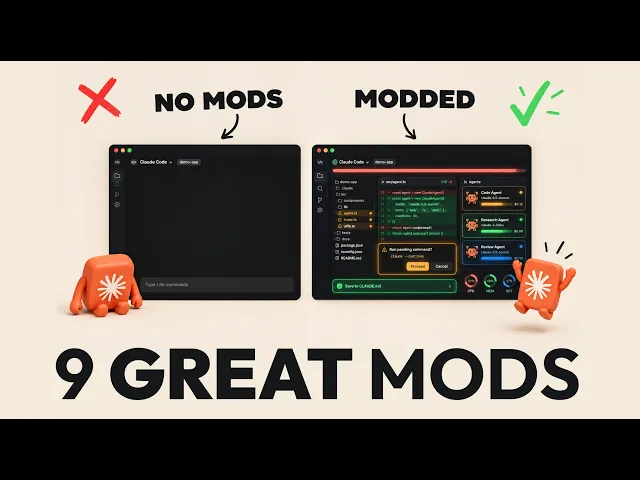
37/100 · Useful but promotional9 NEW Claude Mods that can truly change how you workJay E | RoboNuggets

47/100 · Useful but promotionalI built myself a GAME CHANGING app with Opus 5.5: It's not what you thinkClearmud

26/100 · Useful but promotionalI Built Another Andrej Karpathy Using ClaudeNate Herk | AI Automation

28/100 · Useful but promotionalyou need to try Paperclip RIGHT NOW!NetworkChuck