Hype Check · Greg Isenberg
Worth your time?
Making $$$ with Loop Engineering by Greg Isenberg
 Watch on YouTube
Hype score · lower is better
34/100
Useful but promotional
Teaches: practical, copyable loops for SEO, ads, and product feedback with real demos and modest self-promo rather than a hard sell.
Receipts
Why this score
- Scored from the transcript, summary, and output signals.
Title partialTitle promises making money ("$$$"), the video delivers practical loops and how-to steps but shows no verified earnings or guaranteed income figures.
Skip the video
The short version
Kept by Clip'd
This episode explains how to turn loop engineering from a buzzword into operational automation that runs parts of your business continuously. Ellie walks through the loop pattern (build, verify, stop), shows an SEO loop demo using Google Search Console and DataForSEO, and outlines other loops for ads and product feedback. The video gives concrete implementation paths: paste a prompt from atomieve.dev into Claude/Codeex, connect APIs, set objective metrics, and schedule monthly runs with Slack notifications.
Keep the lesson
What it teaches
- Turn repeatable business processes into feedback loops by defining: (1) the data sources your agent needs, (2) a single objective metric to judge success, and (3) a concrete stop condition and audit trail. Apply this when the activity is measurable and repeatable (SEO ranking, ad A/B tests, eval scores). Do not apply i
- Use periodic cadence rather than continuous compute to control cost and compound results. Run loops on a schedule (monthly/biweekly) for processes where outcomes compound over time, such as SEO or organic growth. Avoid running expensive real-time loops for low-value readouts; instead batch runs and notify you for appro
Jump straight there
Key moments
- 3:32Provocative framing: the Ditro tweet claiming software could build itself and reach product market fit, which motivates the episode's question of feasibility
- 7:17Core pattern: articulation of the loop steps (build, verify, stop condition) that form the operational model you apply to any process
- 9:16Concrete verification example: using evals (tests) with a target like 90% to let the agent iterate on prompts or model choices
- 10:03SEO as a measurable loop: defining Google ranking as an objective metric and running monthly experiments that compound over months
- 17:21Data demo: opening Google Search Console for draftfantasy.com to show impressions, clicks, and average position as actionable inputs
- 21:02Reusable asset: atomieve.dev prompt shown as a copy-pasteable instruction set you can drop into Claude or Codeex
Lines worth keeping
Quotes
Clip'd
Skip the video. Keep the lesson.
The Hype Board
More scored videos

61/100 · Hype heavyGemini 4 and Muse Wonder Are HUGE… But Claude DESTROYS ThemRiley Brown

34/100 · Useful but promotionalCopy This Grok Bot Prompt, It'll Blow Up Your X AccountJacob C. Edmunds
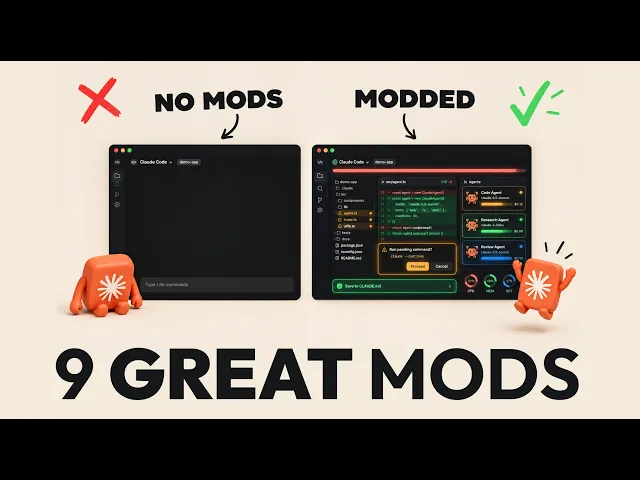
37/100 · Useful but promotional9 NEW Claude Mods that can truly change how you workJay E | RoboNuggets

47/100 · Useful but promotionalI built myself a GAME CHANGING app with Opus 5.5: It's not what you thinkClearmud

26/100 · Useful but promotionalI Built Another Andrej Karpathy Using ClaudeNate Herk | AI Automation

28/100 · Useful but promotionalyou need to try Paperclip RIGHT NOW!NetworkChuck