Worth your time?
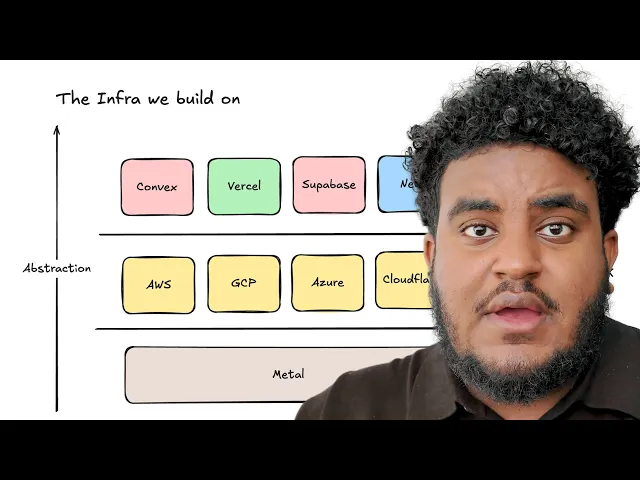
If you're building with AI, watch this (System Design Overview) by Ras Mic
 Watch on YouTube
Teaches: useful, concrete system-design walkthrough for building AI-backed apps, with a single sponsor plug and occasional overstatements.
Why this score
- Scored from the transcript, summary, and output signals.
The short version
Ross walks through how he designed Pluto, an AI agent product, focusing on practical system-level choices: why he uses a monorepo, which managed infrastructure (Vercel, Convex, Daytona) he trusts, how he segments services (iMessage, inference/payments), and the trade-offs he accepted (cost, reliability, developer/agent experience). The video emphasizes using higher-level abstractions so agents and developers can operate on the whole codebase, durable backend workflows for long-running tasks, and concrete stack decisions for production-ready AI apps.
What it teaches
- Favor managed, higher-level abstractions when your primary constraints are developer speed, maintainability, and agent automation. Use them to reduce bespoke infrastructure work so your team can focus on product logic. Don't apply this when you have hard requirements on latency, cost ceilings, or regulatory needs that
- Treat system design as a trade-off matrix: for each feature, list which axis you optimize (scale, reliability, performance, cost) and accept the consequences on the other axes. Use this before picking services so decisions are explicit; the common mistake is optimizing only for speed of prototyping and discovering brit
- Segment functionality into services that touch a single surface area and keep the client-server-database boundary strict. Apply this when a feature can be isolated (iMessage, inference/payments). The common error is over-exposing database access to clients or over-coupling unrelated features into a single backend, whic
Key moments
- 2:14Engineering is all about trade-offs: sets the lens for every architectural decision in the video.
- 7:20Greptile code review workflow: shows using AI to triage large PRs and only manually reviewing high-confidence items.
- 10:52Monorepo + agent access: explains why a single repo lets your agent (Fable 5) reason over the whole product.
- 13:40Never let the client talk directly to the database: a security and maintainability rule that rejects client-side DB patterns.
- 15:11Convex marries server to database: highlights picking an abstraction that provides backend, DB, realtime, and workflows together.
- 16:41Durable processes/workflows: explains why long-running tasks must survive tab closes and how Convex workflows provide that.
Skip the video. Keep the lesson.
More scored videos